It’s not vanity, it’s safety: what construction must learn from the military’s PPE failure
Anna, Founder
30 September 2026
Recently, the BBC published an article that should strike a nerve with anyone working in construction, engineering, and the built environment. Women in the armed forces are still being issued kit that does not fit them properly, a full five years after a landmark report warned they were at a "greater risk of harm" from ill-fitting uniform and equipment.
Female troops are still being handed flat body armour plates that fail to account for breasts or curves. As one veteran powerfully pointed out regarding the refusal to design equipment for female bodies: "fit isn't about vanity, it's about safety".
If you work in construction, this sounds uncomfortably familiar. On the surface, the military and the built environment seem worlds apart, yet we share a foundational flaw: we are forcing women to operate in environments and in gear that were never designed for their survival.
When default design becomes dangerous
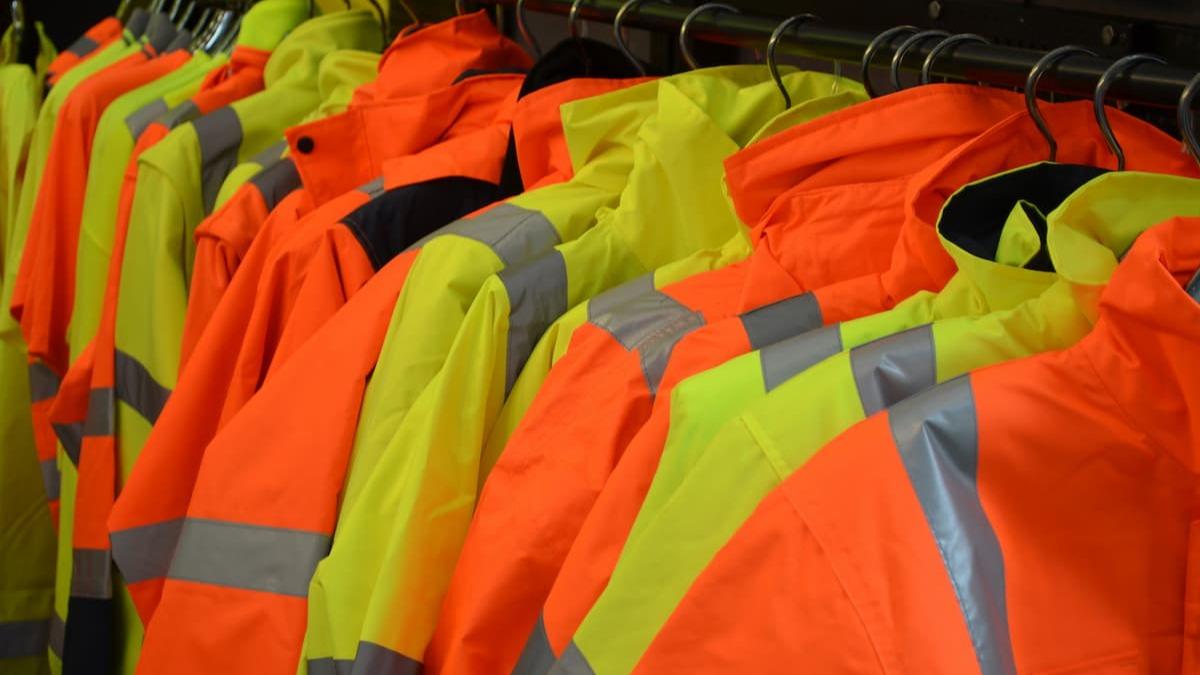
In my recent presentations at Digital Construction Week, I highlighted the same crisis unfolding on our building sites. We have to stop pretending that oversized jackets and unwearable boots are just a minor inconvenience. Ill-fitting PPE isn’t vanity; it’s survival.
The statistics back this up with grim clarity: research by industry campaigner Katy Robinson shows that 10% of accidents in the industry are due to ill-fitting PPE. When standard issue gear is built around a male baseline, the default design becomes inherently dangerous for women. It forces them to either adapt and endure, or withdraw entirely.
The pioneers driving change
The critical difference is that while the military has allowed half a decade to pass with glacial progress, women in construction are taking matters into their own hands.
We are seeing incredible strides thanks to relentless campaigning. Katy Robinson has been spearheading a nationwide campaign for inclusive workwear, which recently resulted in a massive milestone: the release of the new British Standard BS 30417 for the Provision of Inclusive PPE.
Alongside policy shifts, female founders are engineering the solutions themselves. Consider Fae Gordon Holliday at Venus Workwear, who has engineered workboots designed specifically for women after she was fed up with compromising on comfort, safety and style. Look at Emma Symon at Threadline, who is tackling the fact that up to 94% of women experience issues with their workwear fit. They are co-creating technical, natural-performance garments built from real feedback by tradeswomen to ensure protection, utility, and safety.
Procuring for safety, not profit
Better design alone isn't enough if the industry won't buy it. We need businesses to step up and procure for safety, not profit first.
It comes down to Commercialisation 101: the more businesses mandate and purchase inclusive, women-specific PPE, the more the demand rises. As demand rises and economies of scale kick in, the manufacturing costs drop, making these life-saving garments cheaper and easier for everyone to access across the supply chain. You have the purchasing power to normalise safety.
Don't let 5 years pass
We cannot emulate the military’s timeline. We cannot afford to let five years pass and see nothing change. We need to act quicker. Every day we wait is another day a woman steps onto a site in gear that actively puts her in harm's way. Every day we wait is another day a woman sees an industry that doesn’t welcome her.
The industry knows it has a retention problem, but it cannot fix what it refuses to fully understand. If you want to understand the real harm and impact that ill-fitting PPE, isolation, and exclusionary site cultures are having on your workforce, sign up for the We Build Too platform.
We are turning the authentic, lived experiences of women across construction, engineering and the built environment into actionable workforce insight that employers desperately lack.
Join us to build an industry that is safer, more inclusive, and ready for the future.