A series: What the AI Revolution and Construction have in common (1)
Anna, Founder
26 February 2026
This article is part one of a three-part series exploring what the AI revolution can teach construction about bias, belonging, and the systems we build.
Foundations matter: What AI’s gender problem reveals about construction
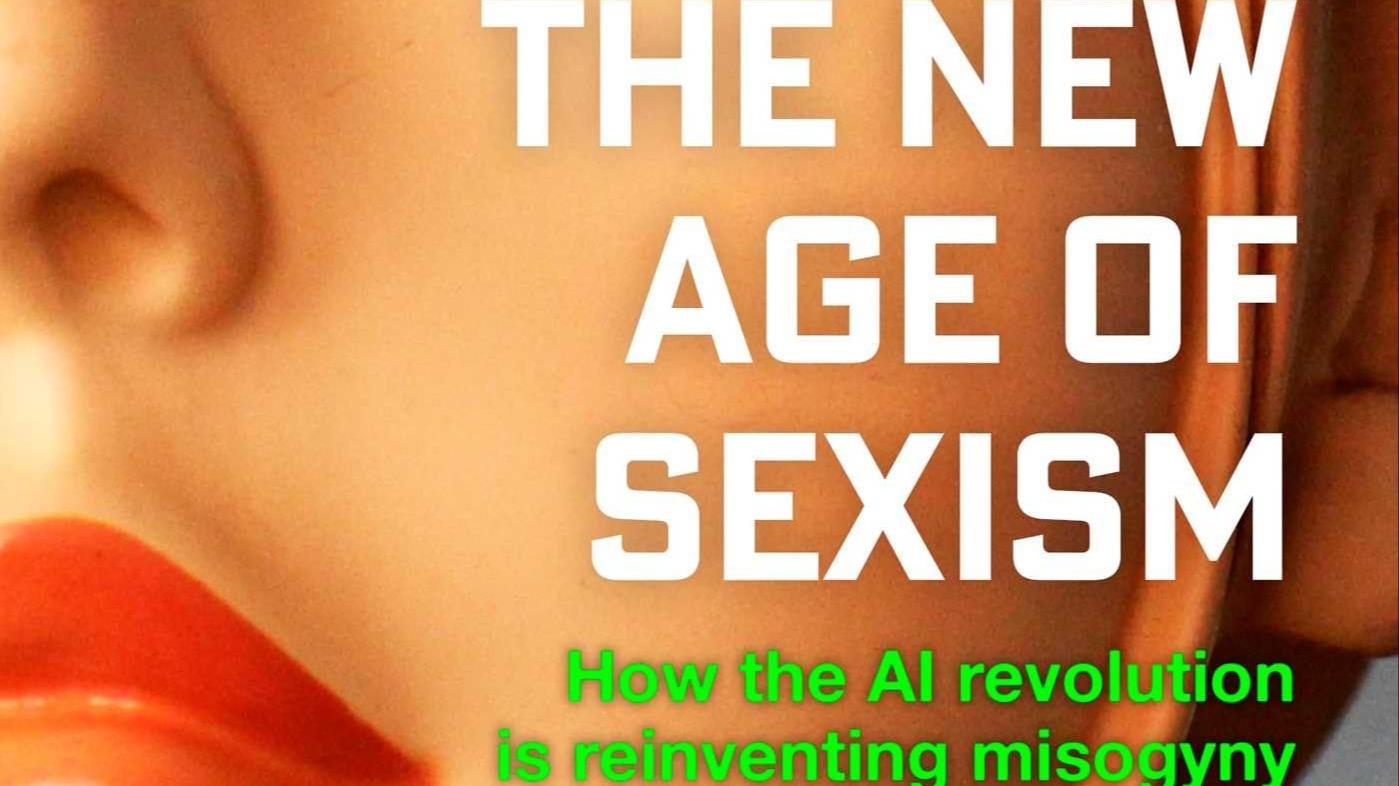
I’ve been listening to The New Age of Sexism: How the AI Revolution is Reinventing Misogyny by Laura Bates while continuing my research on women in construction.
On the surface, AI and construction seem worlds apart. One is building digital systems, and the other builds physical infrastructure. But the deeper I get into both, the more I see the same pattern emerging: We are building new systems on foundations that were not designed with women’s experiences in mind.
And as everyone in construction knows, when foundations are flawed, everything built on top inherits that flaw.
This is exactly why we are building We Build Too, a platform designed to ensure women in construction have spaces, tools, and networks that prioritise safety, agency, and growth. While the platform is still in development, we are actively involving women and industry leaders in shaping it to meet the needs of those it intends to serve. At the same time, it will generate anonymised insights to help industry leaders understand where barriers exist, what’s driving withdrawal, and how workplaces and systems can be redesigned to be genuinely inclusive.
When inequality gets “baked in”
Bates argues that we are at a pivotal moment: emerging technologies are not simply reflecting existing inequality, they are incorporating it into the design of future systems.
Her warning is clear: if bias is built into foundational code, unpicking it later becomes exponentially harder.
Construction should find this uncomfortably familiar.
For decades, the industry has built workplaces, site cultures, PPE standards, and career pathways around a predominantly male workforce. Women represent less than 15% of the UK construction workforce, and far less in many on-site trades (less than 2%).
When women are underrepresented in shaping environments, those environments reflect that absence.
PPE that doesn’t fit properly
Welfare facilities were designed as an afterthought
Cultures normalised around “banter” that's disrespectful and misogynistic
Leadership that mirrors existing demographics
None of these is usually framed as deliberate exclusion, but they compound to be just that.
Just as algorithmic systems can scale bias at speed, construction has scaled and reinforced the same cultural norms over generations.
The result in both cases is the same: inequality becomes structural rather than incidental.
The cumulative effect of “low-level” harm
One of the most powerful insights from Bates’ work is not about extreme abuse, but accumulation.
Globally, over a third of women report experiencing online violence, and the vast majority have witnessed it. Women are dramatically more likely than men to experience harassment online, with Black women facing disproportionately higher levels of abuse.
Beyond statistics, the key impact is behavioural.
Women learn to:
Self-censor
Use pseudonyms
Mute themselves
Avoid posting
Withdraw
Many think twice before sharing opinions online, and a large number report that the internet is not a safe place to express themselves.
This is where the parallel with construction becomes sharp.
In interviews with women in trades and training, I hear a different but equally telling pattern; not always about withdrawal, but about pressure and expectations.
“You have to work twice as hard for half the recognition.”
“You have to be quite a tenacious girl and have a lot of self-confidence.”
“I feel like I have to be an even higher standard… just because I’m a woman.”
Instead of shrinking, many women describe raising the bar for themselves, over-preparing, over-performing, over-proving.
On the surface, this can look like resilience and exceptional performance, but structurally, it reveals that the baseline expectation is not neutral.
When women feel they must outperform simply to be treated as equals, belonging is conditional, and that conditional belonging has consequences.
For some women, it means constant self-surveillance and pressure once inside the industry, but for others, it means deciding not to enter at all.
One construction student told me she didn’t want to work on site, not because of direct experience as a worker, but because of what she had experienced walking past building sites growing up.
Before she had even entered the workforce, her access had narrowed.
Bates makes the point that repeated “minor” harassment, the everyday comments, dismissals and leering, gradually restrict women’s access to public space.
Construction sites are often public-facing workplaces. If women experience them as hostile before they even start, then the industry isn’t just struggling with recruitment, it’s dealing with the accumulated impact of everyday exclusion.
Construction understands foundations better than most industries. When bias becomes embedded in systems, it doesn’t stay contained; it compounds.
In the next article, I’ll explore what this looks like inside construction and why women’s withdrawal may not be accidental, but a predictable response to the environments we’ve built.
We'd love to hear your thoughts. Get in touch, hello@webuildtoo.com